
Electrical insulation is essential for the safety, function, and service life of electrical and electronic systems. Insulating components separate live components from one another, prevent unwanted current paths, and protect against flashovers and dielectric breakdown.
However, it is not enough to focus solely on a material’s dielectric strength. Operating voltage, temperature, material thickness, tracking resistance, moisture, contamination, flammability, mechanical loads, and available installation space must be considered together.
SCHLÖSSER processes electrical insulating films, insulating papers, and multilayer materials into custom die-cut parts, cut pieces, formed parts, and functional components.
An electrical insulation system must meet different requirements at the same time. What matters, therefore, is not the highest individual value of a material, but the interaction of material, geometry, environment, and application.
During the design process, we consider the following in particular:
Operating voltage, dielectric strength, CTI, clearance and creepage distances
Continuous and peak temperatures, temperature fluctuations
Moisture, contamination, media, and chemicals
Material thickness, tolerances, bend radius, compressive load
UL 94 and other required classifications
Adhesive or non-adhesive, positioning, formability
Heat conduction, sealing, damping, bonding, or printing
Geometry, quantity, tolerances, and delivery format
The properties of electrical insulating materials can vary significantly. In addition to the base material, material thickness, specific grade, temperature, moisture, and flammability classification in particular influence suitability for an application.
The following overview therefore serves as a preliminary technical selection. Specific values must always be checked against the respective material data sheet and the intended material thickness.
| Material group | Example materials | Typical / available thicknesses | Temperature resistance* | Flammability / UL 94* | Electrical insulation | Formability and foldability | Moisture behavior | Key strengths |
|---|---|---|---|---|---|---|---|---|
| PP – Polypropylene | Formex® GK, Formex® EP | ca. 0,125–1,57 mm | ca. 105–115 °C | VTM-0, VTM-2 or V-0, depending on type and thickness | good to very good; values of approx. 11 to 41.6 kV were recorded in the comparison matrix, depending on type and thickness | very good | very low water absorption |
excellent foldability, robust formed parts, various thicknesses |
| PET – Polyester | Mylar® Type A, Hostaphan® RN | ca. 0,10–0,50 mm | ca. 120 °C | dependent on type and thickness, e.g. UL94 HB, VTM-2 or V-0 | high dielectric strength; dependent on grade and thickness | good | low water absorption | thin, flexible, cost-effective, easy to process |
| PC – Polycarbonate | Lexan® FR700, Makrofol® FR 7-2 | ca. 0,13–0,50 mm | ca. 130–135 °C | UL94 V-0 | good electrical insulation | moderate to good | low water absorption | combination of insulation and mechanical stability |
| PI – Polyimide | Kapton® HN | very thin films available | very broad potential operating range; application-dependent | type-dependent | very good electrical insulation even at low thicknesses | easy to process, but with different folding characteristics from PP | low | high temperature resistance with minimal space requirements |
| Pressboard / Electrical Insulating Board | Electrical Pressboard, Electrical Insulating Board | various grades and thicknesses | type-dependent | type-dependent | good electrical insulation | easy to crease, fold and form | moisture must be taken into account | cost-effective, mechanically stable, proven electrical insulating material |
| Aramid Paper | Nomex® 410 | approx. 0.13–0.76 mm in the comparison matrix | up to approx. 220 °C for the material considered | UL94 V-0 | good to very good electrical insulation | more limited than PP/PET | higher water absorption than many plastic films | high thermal resistance + electrical insulation |
| Glimmer / Mica | Mica Paper, Mica Sheets, Mica Laminates | highly product-dependent | suitable for very high temperatures | product-dependent | very high dielectric performance | not suitable | product-dependent | for extreme thermal and electrical stresses |
| multilayer materials | NMN, NKN, e.g. Trivoltherm® | dependent on the material structure | dependent on the individual layers | dependent on the material structure | highly adaptable | can be specifically optimized through the combination of layers | dependent on the layer structure | combines the advantages of different materials |
PP insulating films combine good electrical insulation with very good foldability and formability. This makes them particularly suitable for complex geometries and three-dimensional insulating parts.
Typical properties
Typical applications: Housing insulation, batteries, busbars, electronics, and three-dimensional insulating parts.
Example material: Formex® GK and comparable PP insulating materials.
PET insulating films are thin, flexible, and electrically insulating. They are particularly suitable for applications with limited installation space, as well as flat and flexible insulating parts.
Typical properties
Typical applications: Electronic assemblies, interlayers, electric motors, coils, and batteries.
Example materials: Mylar®, Hostaphan®, and comparable PET insulating films.
Polycarbonate insulating films combine electrical insulation with mechanical stability. They are therefore of interest when an insulating part is also intended to perform a structural or protective function.
Typical properties
Typical applications: Housings, covers, control elements, electronics, and dimensionally stable insulating parts.
Example materials: Lexan®, Makrolon®, and comparable PC insulating films.
Polyimide films are used where high electrical and thermal requirements meet limited installation space. They provide effective electrical insulation even at low material thicknesses.
Typical properties
Typical applications: Electric motors, sensors, power electronics, and electronic assemblies with demanding thermal requirements.
Example material: Kapton® HN and comparable polyimide films.
Pressboard is a cellulose-based insulating material for traditional electrical engineering applications. It combines electrical insulation with mechanical strength and can be economically processed into various insulating parts.
Typical properties
Typical applications: Electric motors, generators, transformers, coils, slot and phase insulation, and interlayers.
Example materials: Electrical pressboard and electrical insulating cardboard in various grades.
Aramid paper combines good electrical insulating properties with high thermal and mechanical load capacity. The material is particularly suitable for demanding insulation systems in electrical machines.
Typical properties
Typical applications: Electric motors, generators, transformers, coils, and slot, phase, and interlayer insulation.
Example material: Nomex® 410 and other Nomex® grades.
Mica is used when particularly high requirements for temperature resistance and electrical insulation must be met.
Typical properties
Typical applications: Electrical heating systems, high-temperature applications, power electronics, and electrical machines.
Example materials: Mica paper, mica sheets, mica laminates, and mica-based composite materials.
Not every requirement can be optimally met with a single material. Multilayer materials combine different insulating materials to bring together electrical, thermal, and mechanical properties.
Typical properties
Typical applications: Electric motors, generators, transformers, batteries, and electrical assemblies.
Example materials: NMN: Nomex® / PET / Nomex®; NKN: Nomex® / Kapton® / Nomex®; for example, Trivoltherm®.
In addition to the properties of the insulating material, component geometry also plays a decisive role.
Clearance refers to the shortest distance through air between two conductive parts. It is designed based, among other factors, on expected overvoltages and environmental conditions.
Creepage distance, on the other hand, refers to the shortest distance along the surface of a solid insulating material between two conductive parts. In addition to voltage, material properties and contamination conditions in particular influence the required dimensions.
In power electronics, batteries, LED systems, converters, or control units, two opposing requirements often come together:
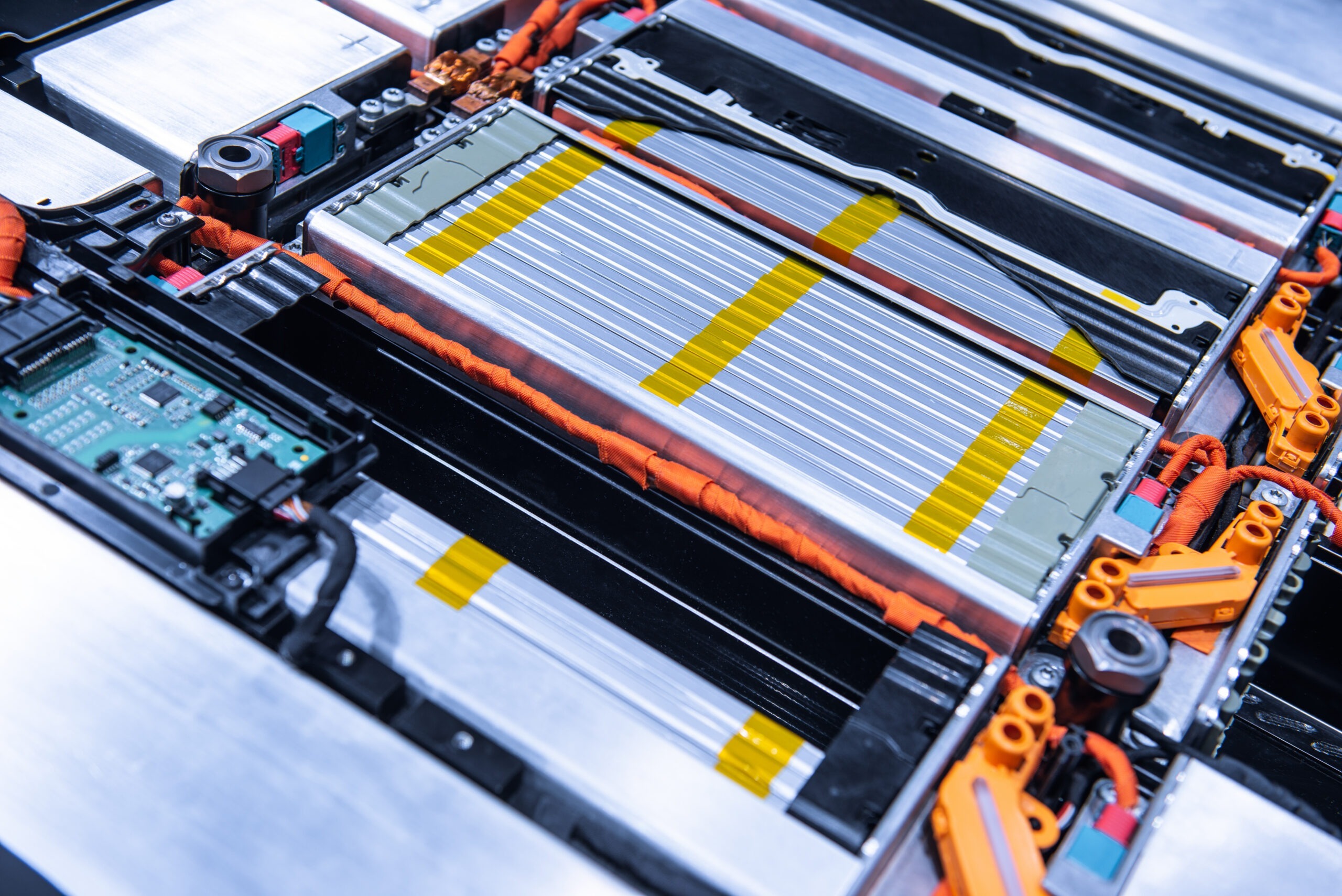
This is where electrically insulating Thermal Interface Materials (TIM) are used. They support heat transfer between heat-generating components and cooling surfaces while also providing electrical insulation.
Depending on the application, materials based on silicone, polyurethane, or acrylate with different thermal conductivities, hardness levels, thicknesses, and electrical insulation properties may be suitable.
SCHLÖSSER supplies more than just the material. What matters is the resulting component and its integration into the customer’s application.
Depending on the material, geometry, and quantity, various processing methods are available:
Die cutting
Rotary die cutting
Kiss cutting
Laser cutting
Waterjet cutting
Embossing and forming
Laminating
Laminating
Fully or partially self-adhesive finish
Multilayer material structures
According to your wishes and requirements, we offer a wide range of delivery formats suited to your assembly process. Parts can be supplied individually, bundled, stacked, secured with stacking pins, arranged on strips for both adhesive and non-adhesive parts, in blister packs, KLT containers, on reels, or packaged and delivered in other ways.
Our goals are optimal installation of the products and handling of the parts in the customer’s subsequent assembly process, as well as protection of the items from damage until further processing.
We also strive for close integration with our customers’ systems through interfaces such as EDI, EDIFACT, or established platforms such as SupplyOn, allowing information to be exchanged smoothly through delivery and invoicing.
In confined or three-dimensional installation spaces, a flat insulating film is often not sufficient. By introducing bend and fold lines at specific locations, insulating films can be processed into three-dimensional insulating parts and adapted to the contours of housings, batteries, or electrical assemblies.
Depending on the material and geometry, bend lines can be created, for example, by embossing, laser processing, or controlled compression. This allows the component to be delivered flat and folded into its final shape during assembly. SCHLÖSSER already describes these processes on the existing page for bent designs in confined installation spaces.
A self-adhesive finish can significantly simplify the assembly of thin or flexible insulating films.
Depending on the application, the adhesive layer can be:
This allows the insulating part to be positioned precisely during assembly and secured against slipping.

The film shown here is used to insulate against electrical breakdown between individual components with due reference to UL94 requirements.

Slot liners are used primarily in electric motors and alternators. They are installed in grooves or slots as insulation to prevent electrical flashovers. Slot liners are made using materials from all classes of insulation material and they clad the grooves or slots in sheet metal packs.

The intermediate layer provides isolation between the various battery cells, e.g. on an e-bike.
From simple insulating films and self-adhesive die-cut parts to multilayer functional components, SCHLÖSSER develops and manufactures insulation solutions tailored to the application, installation space, and assembly process.
In doing so, we combine material selection, component design, and processing into a solution suitable for manufacturing.
The following information is particularly helpful for an initial technical assessment:
There are hardly any limits to the applications for SCHLÖSSER seals, technical parts, and more. In many industries, our products are an indispensable part of numerous applications and functions, including automotive, electrical, plumbing, and others.
We are also happy to provide highly specialized and custom solutions: with an experienced team of advisors, decades of experience, and a wide range of materials and manufacturing processes. This is how we at SCHLÖSSER make your requirements our task.
Please note that the boxes marked with an asterisk (*) must be filled in to enable us to process your input properly.
Schlösser GmbH & Co. KG
Wilhelmstraße 8
88512 Mengen/Germany
Unser jährlicher Outdoor-Tag ist eines der Highlights während der Ausbildung. Es erwarten dich darüber hinaus noch vielfältige Aktivitäten, wie z. B. ein Fahrsicherheitstraining, Betriebssport, gemeinsame Grillfeste und Essen, etc.
Unsere Bezahlung während der Ausbildungs- und Studienzeit kann sich sehen lassen. Neben einer monatlichen Vergütung erhältst du Urlaubs- und Weihnachtsgeld sowie weitere attraktive Sonderzahlungen und Prämien. Auch besondere Leistungen werden von uns belohnt – neben einer jährlichen Sonderzahlung für gute Noten erhalten Kammersieger und Jahrgangsbeste einen Sonderurlaubstag sowie Eintrittskarten für den Europapark in Rust.
Bei uns wird FAMILIE großgeschrieben. Wir leben einen kollegialen und freundschaftlichen Umgang, gegenseitigen Respekt und Wertschätzung sowie Hilfsbereitschaft – unabhängig jeglicher Hierarchieebenen. Bei uns gehörst du von Anfang an dazu.
Während deiner Ausbildung- und Studienzeit geben wir dir die Chance, dich zielgerichtet zu entwickeln – für Positionen die deinen Stärken am besten entsprechen. Nach Beendigung deiner Ausbildung bzw. deines Studiums ist dein Weg bei uns noch lange nicht zu Ende. Schließt du deine Ausbildung bzw. dein duales Studium erfolgreich ab und zeigst auch in den Fachabteilungen gute Leistungen, möchten wir dich im Anschluss in einer Fach- oder Führungsfunktion übernehmen.
Belegte Brötchen, Müsli, Wurstsalate, frische Salate und warme Speisen – die Auswahl in unserer Betriebskantine ist nahezu unbegrenzt. Mit einem großzügigen Arbeitgeberzuschuss sind die Preise besonders attraktiv.
Du wirst in den einzelnen Fachabteilungen von kompetenten Mitarbeitenden betreut, die täglich ihr Bestes geben, um unsere Auszubildenden und Studierenden zu qualifizieren. Deine individuelle Betreuung wird ergänzt durch einen persönlichen Paten und deine Ausbilder.